Nobody explains this up front and it costs people money when they find out halfway through. Here is the whole sequence before you enroll.
1. Entry-Level Driver Training (ELDT)
Federal law requires this training before you are even eligible to sit for the skills test. It is not optional and it is not a formality - it is the classroom and behind-the-wheel curriculum we run in weeks one and two.
2. Written exams for the commercial permit
General knowledge, air brakes, and combination vehicles if you are going Class A. We test you in-house until you pass before sending you to the state.
3. The three-part skills test
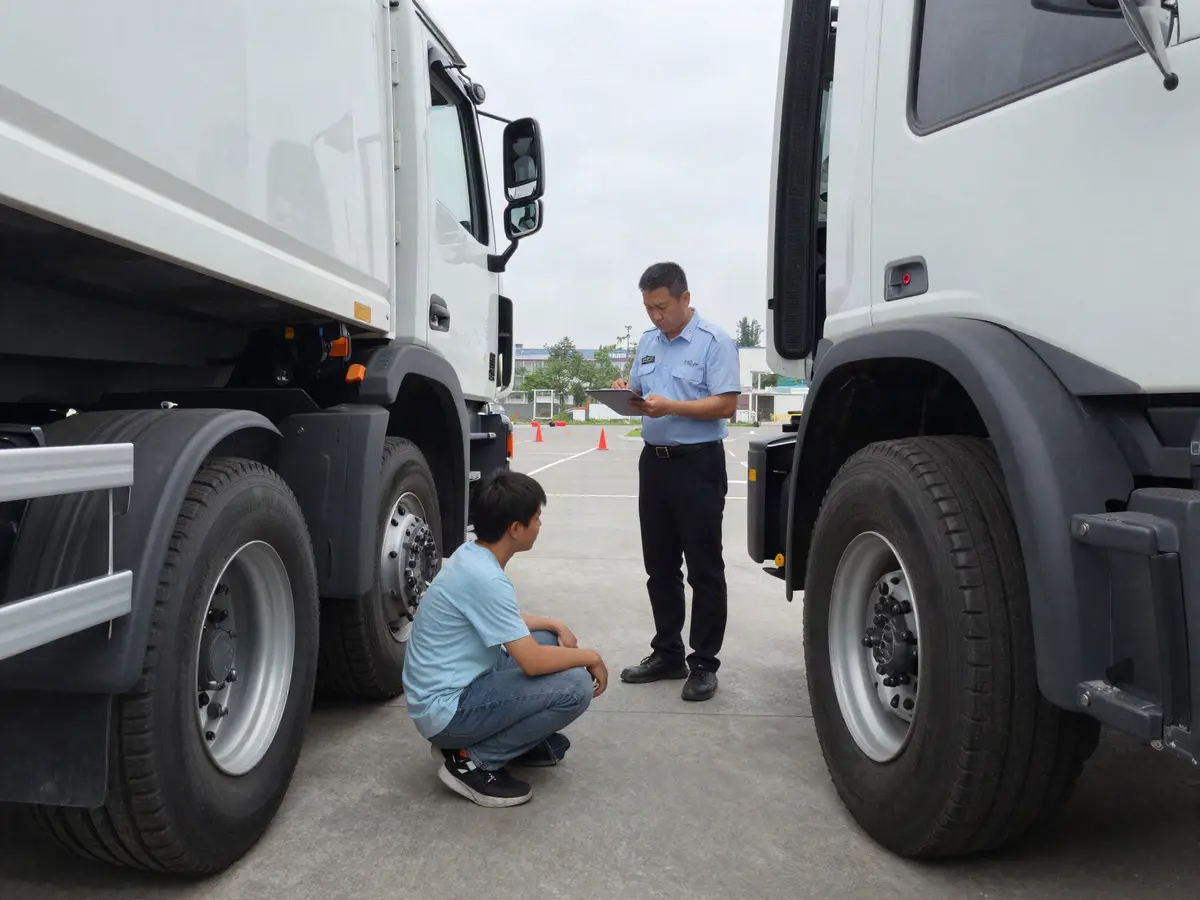
Pre-trip inspection, backing maneuvers, and the on-road drive. The pre-trip inspection is the part most people fail, because it is memorization under a stopwatch, not driving - we drill it every single day, not just the week before.
Class A or Class B - a career decision, not jargon
Class A
Tractor-trailer. Opens long-haul and regional freight, and it pays more. You will be away from home more, depending on the route you take.
Class B
Dump trucks, box trucks, buses, and local delivery. Lower ceiling on pay, but you are home every night, which matters to a lot of people more than the difference in the paycheck.
Endorsements, as add-ons
Tanker, doubles and triples, passenger, and school bus each add a day or two of testing. Hazmat adds a TSA background check on top of that - budget extra time if a carrier wants it.
What can stop you before you start
We would rather tell you now than after you have paid a deposit. The DOT physical checks vision, hearing and blood pressure against federal standards. There is a drug screening, and you carry a medical certificate afterward that has to stay current. Some convictions and a rough driving record will cost you offers even after you are licensed - carriers run their own checks, and we cannot waive that for you.