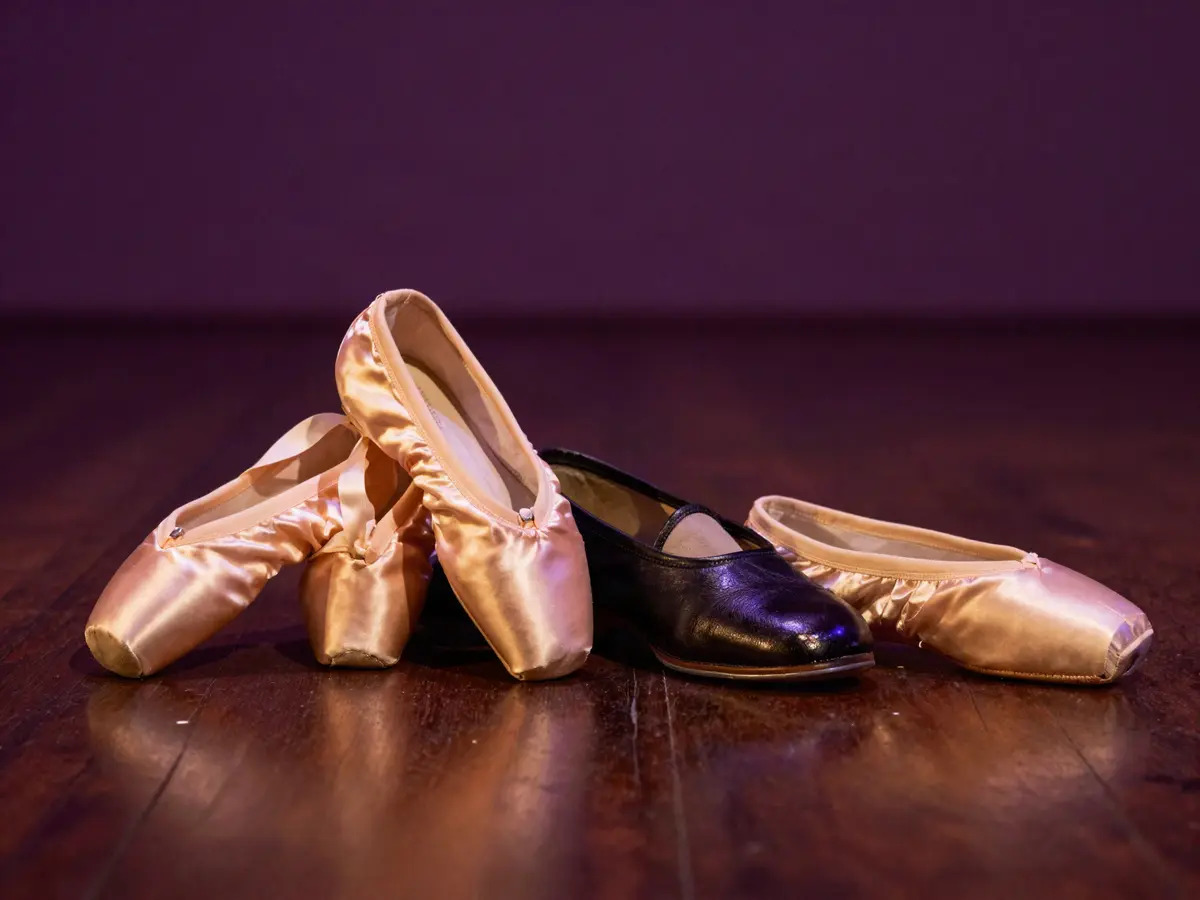
Every class moves through the same technical structure: barre, then centre, then across the floor. Ballet is not one style among six - it is the vocabulary the other five are built from.
Ballet: The technical foundation for every other style taught here - posture, turnout, placement and the vocabulary everything else borrows from.
Tap: Rhythm and sound as the point of the movement, built on the timing ballet already trained into the ear.
Jazz: Sharp, musical and performance-driven, using ballet turnout and alignment inside looser, syncopated shapes.
Contemporary: Floor work, off-balance falls and recovery, and emotional phrasing - the style that asks the most of ballet-trained control.
Hip hop: Groove, isolation and social dance roots, taught as its own tradition rather than a ballet class in sneakers.
Musical theatre: Song-and-dance storytelling that combines jazz vocabulary with acting and voice, usually added once a dancer has a jazz foundation.
Barre, centre, across the floor
Every technique class follows the same three parts. Barre builds alignment and strength with the hand on a fixed support. Centre repeats the same vocabulary without it, testing balance on its own. Across the floor takes the movement traveling, at performance speed, the way it will actually be used on stage.
On pointe work
Pointe shoes are not granted by age. A dancer starts pointe work only when a teacher's assessment confirms enough ankle strength and enough years of correct technique to support it - typically several years of consistent ballet training, never simply "old enough." Rushing a dancer onto pointe before the joint and the technique are ready causes injuries that follow a child for years. Publishing that plainly, instead of selling pointe shoes as a milestone, is one of the clearest marks of a studio that takes training seriously.
The floor itself
Every studio room sits on a sprung floor under a marley surface - a suspended, cushioned subfloor built to absorb impact, not concrete with vinyl laid over it. Concrete under vinyl looks the same on day one and ruins ankles, knees and hips over years of jumping on it. It is not a detail anyone will point out to you unfixed, so we point it out ourselves.
Dress code by style
Ballet asks for a fitted leotard, tights and pink or black ballet slippers so a teacher can see alignment. Tap and jazz allow fitted athletic wear with the style's own shoe. Hip hop is the one class where loose clothing and sneakers are correct rather than a compromise. A full list by class and level is handed out at enrollment.