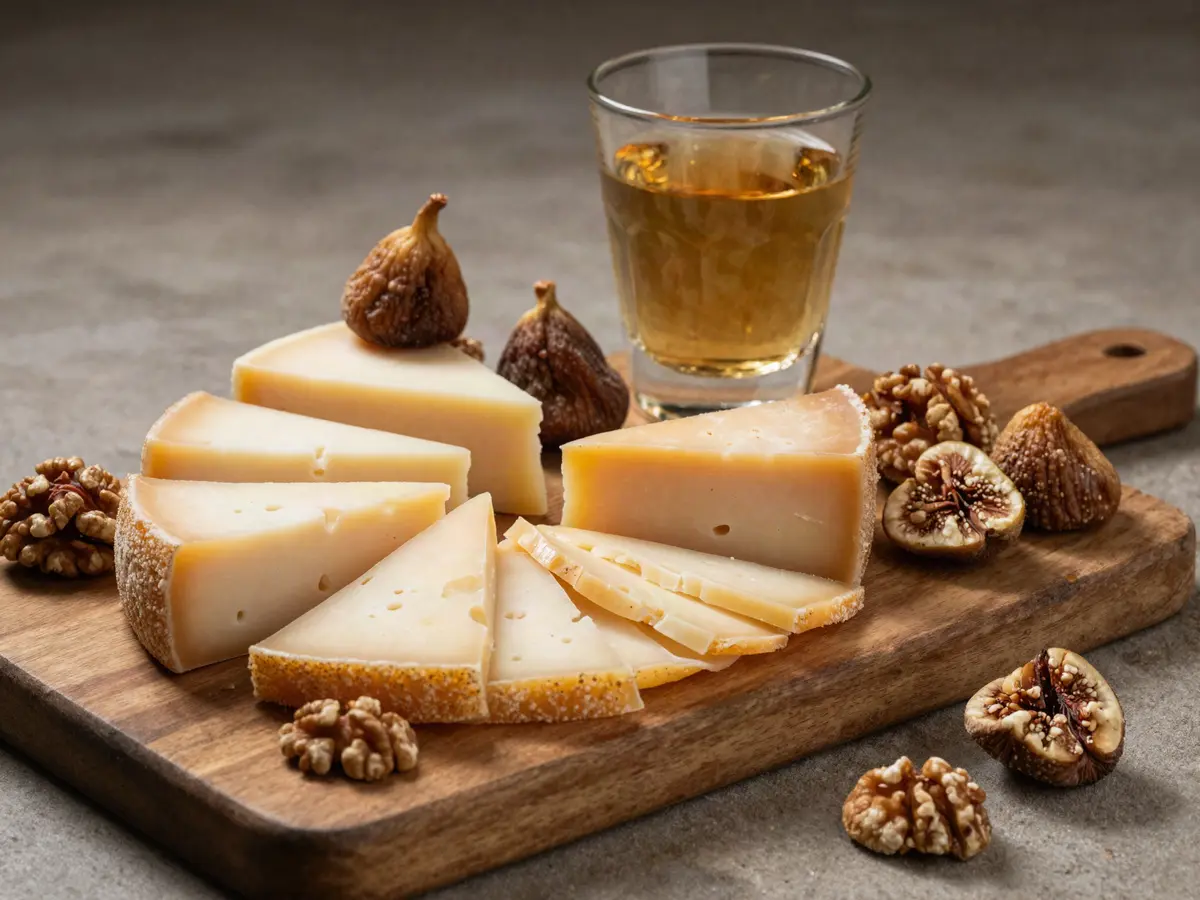
The rule we give behind the counter is milk before mood: a cow cheese wants something with weight, a goat cheese wants something with acid to cut its tang, and a sheep cheese usually falls in the middle. Age matters more than most people expect, too - a young cheese wants a young wine, and a two-year cheddar can hold its own against a stout that would flatten anything softer.
For a cellar-aged alpine or an aged gouda, reach for a dry cider or an amber ale before you reach for red wine - the crystalline crunch fights tannin more than it flatters it. For a washed rind, a Belgian-style ale or a crisp pilsner clears the palate between bites better than most wines can.
Fresh chevre wants almost nothing - a plain cracker, a drizzle of honey, maybe a glass of something crisp and cold. Blue cheese is the one exception to nearly every rule: it wants something sweet, a fig preserve or a glass of something fortified, to stand up to the salt.