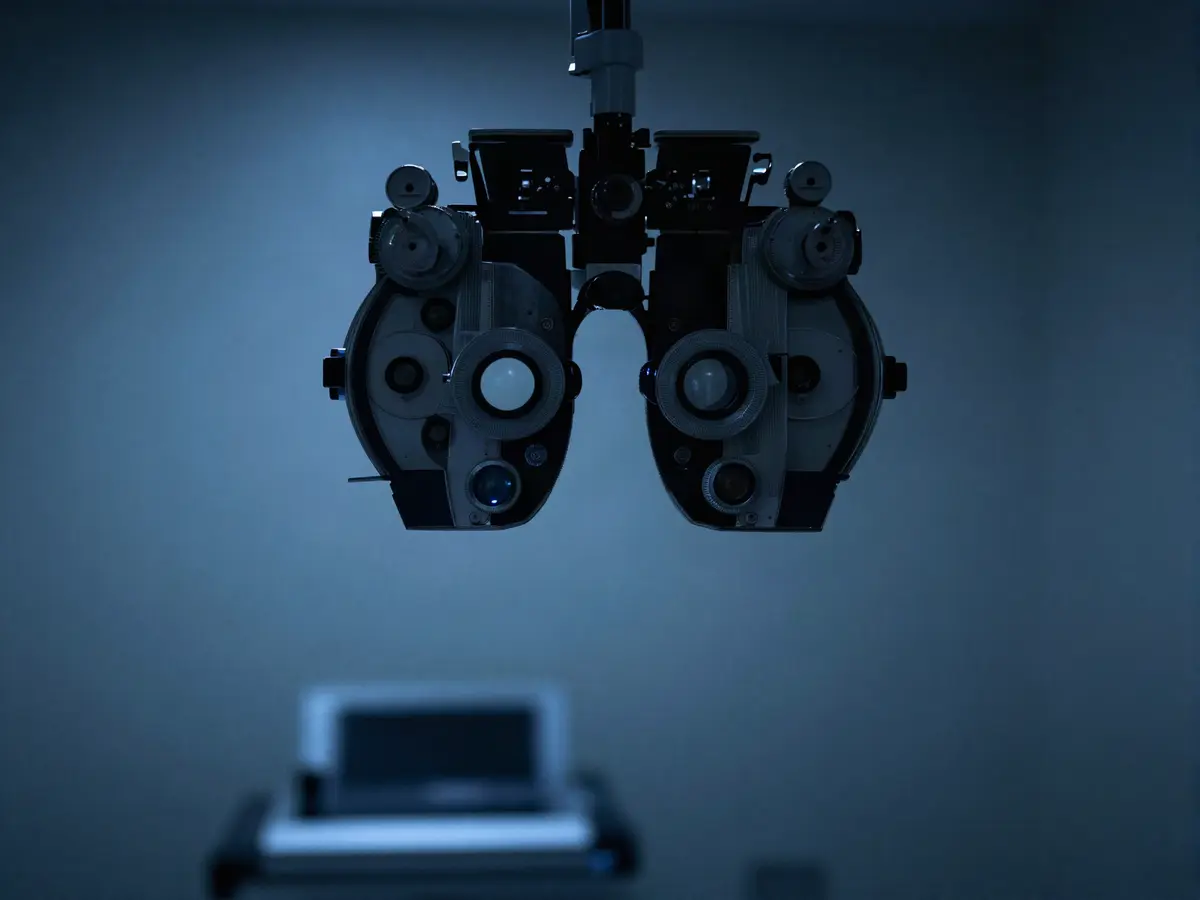
Most people book an exam expecting a number for glasses. That number is one small part of the visit. Dilating the pupil, or imaging the retina without dilation, lets us look directly at the back of the eye - the only place in the body where blood vessels and a nerve can be examined without an incision.
That view can show early signs of glaucoma and macular degeneration, and changes consistent with diabetes or high blood pressure - sometimes before a patient has noticed anything different about their vision at all. A screening at school or when renewing a license checks whether you can read a chart. It does not check any of this.
A typical comprehensive exam runs 45 to 60 minutes and includes a vision check, a health check of the front and back of the eye, and a conversation about your prescription and any symptoms. If dilation is part of your visit, bring sunglasses and plan a little extra time before you head back out into the light.