Wood smoke leaves a tarry residue called creosote on the inside of a flue. Burn after burn it builds up and hardens, and once it is thick enough it becomes fuel itself. A chimney fire is that deposit igniting inside the flue at very high heat - hot enough to crack a liner and, in the worst cases, spread into the surrounding structure. A sweep removes the fuel before that can happen.
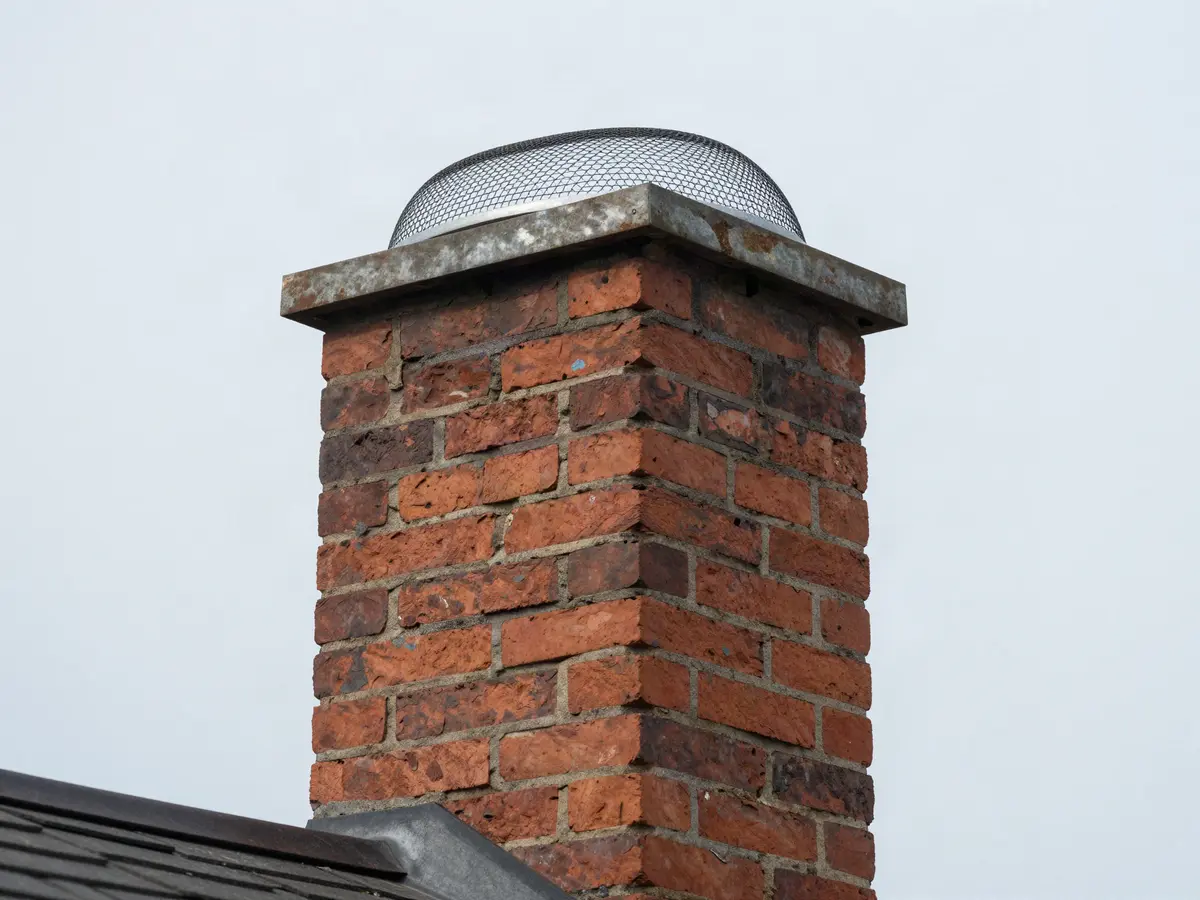
The inspection is worth as much as the sweep itself. We look for a cracked or deteriorated flue liner, gaps in the mortar between clay tiles, a missing or damaged cap that lets in rain, birds and squirrels, cracks in the crown, damaged flashing where the chimney meets the roof, brick spalling from water, and blockages - nests, leaves, or debris left by a previous fire.
The quiet risk is carbon monoxide. A blocked or leaking flue on a gas appliance or furnace can spill combustion gases back into the house instead of carrying them outside. We check that every vented appliance is drafting properly, and we recommend carbon monoxide detectors on every floor with fuel-burning equipment.
On site, we sheet the hearth and run a HEPA vacuum so nothing enters the room, then brush and rod the full length of the flue. Where the visual inspection raises a question about the liner, we follow up with a camera. Every visit ends with a written report and photographs, so you have a record of exactly what we found.