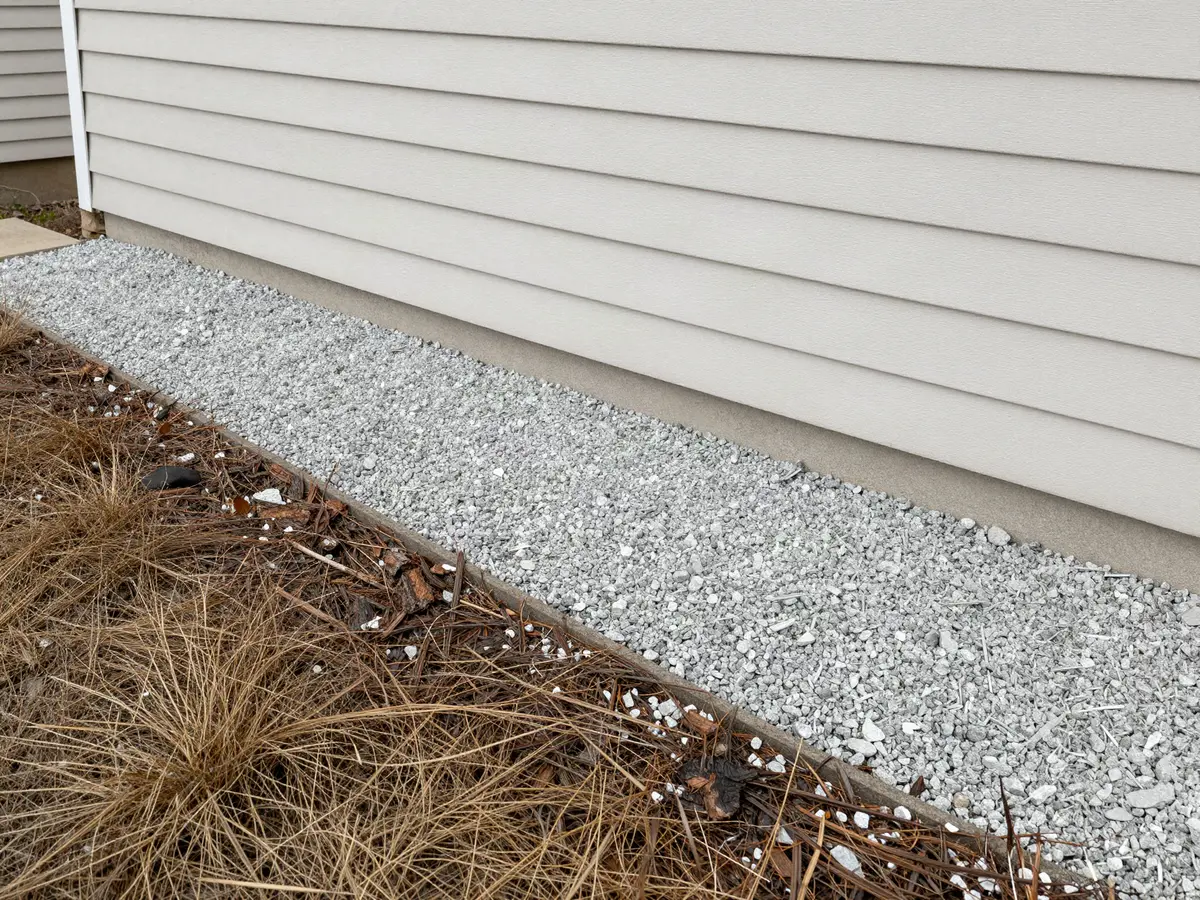
The immediate zone is the first zero to five feet against the structure, kept essentially free of anything combustible. Bark mulch against a wall, a wooden gate touching siding, or a shrub under a window is a direct path in - this band gets hardscape or gravel instead, because the first few feet matter more than anywhere else on the property.
The intermediate zone runs roughly five to thirty feet out and holds low, well-spaced, irrigated planting with real breaks between groups so fire cannot travel plant to plant. This is thinning and spacing work, not a bare-dirt clearing - a well-done job in this zone still looks like a garden.
The outer zone, roughly thirty to one hundred feet or to the property line, is thinned rather than cleared: spacing between tree crowns, dead and dying material removed, and low branches limbed up. Limbing up and breaking that vertical continuity is often more valuable than removing anything, because it stops a ground fire from climbing into the canopy - what the trade calls ladder fuels.
Embers, not the flame front, are what usually ignite a house - wind-driven embers landing in gutters, on decks, in vents, and against fences well ahead of any visible fire. That is why the work also covers roof and gutter debris, needles and leaves raked back from the foundation, firewood stacks moved away from walls, and the space under decks cleared. Naming that mechanism is the single most useful thing we can tell a homeowner.
This reduces risk and improves a structure's chances - it does not guarantee survival, and we say that plainly rather than promise more than any crew can deliver.