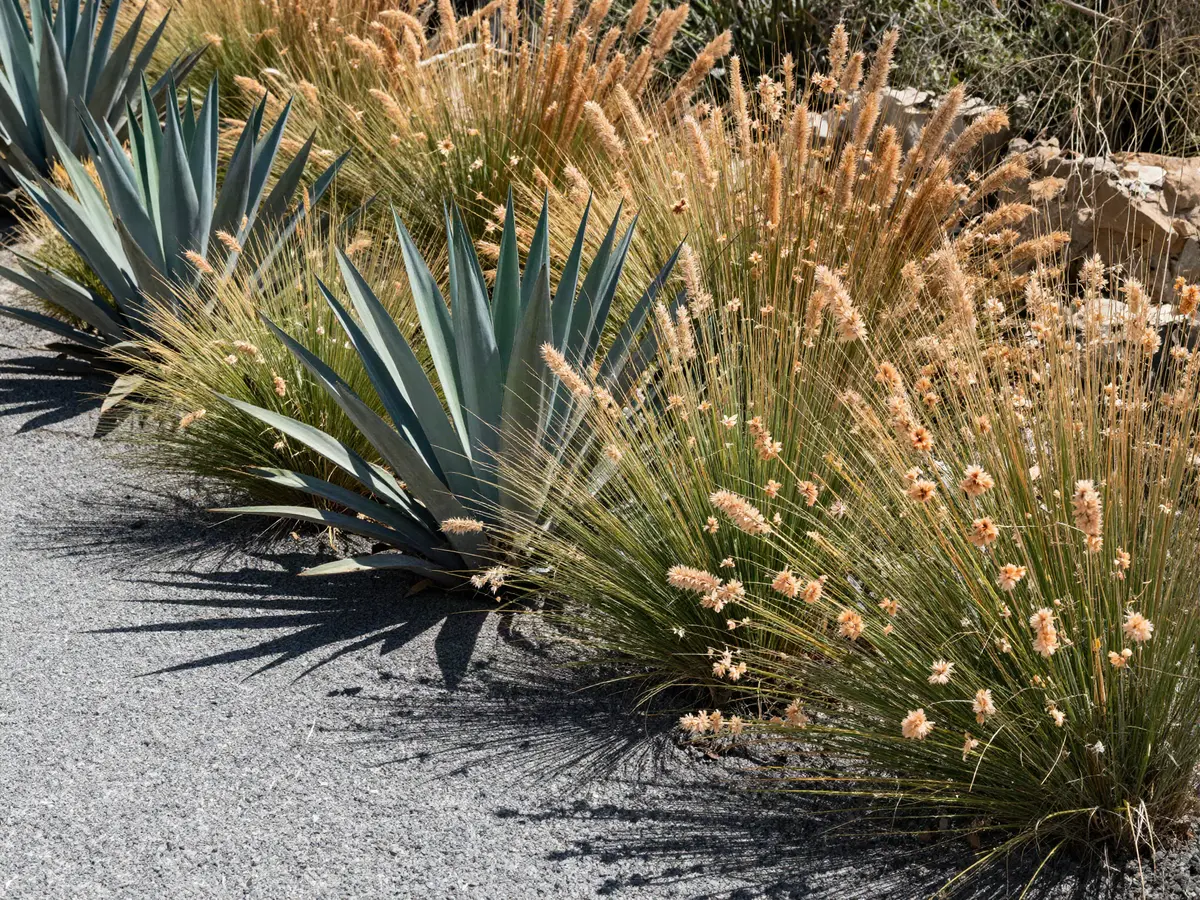
A well-designed dry garden is not a gravel parking lot with a cactus in the corner. We build with structural agaves and yuccas for year-round form, ornamental grasses that move in the slightest wind, and flowering natives chosen to bring in pollinators and hummingbirds through the warm months. Manzanita and ceanothus add height and, in season, real color - a lawn, by comparison, supports almost nothing.
Honesty matters here: drought-adapted and native plants are not no-water plants. They need regular irrigation through their first year or two in the ground while roots establish, and only after that can watering be weaned down to occasional deep soaks. Skipping that establishment period is the most common way a dry garden fails, and we would rather tell you that up front than have you find out in month three.
Every spray head comes out. In its place: drip line and inline emitters run to the base of each plant, on a smart controller that adjusts to weather rather than a fixed weekly schedule, with zones re-planned around planting beds instead of turf shapes. Ongoing care after that first year is seasonal cutbacks and a mulch top-up, not weekly mowing - real work, considerably less of it.