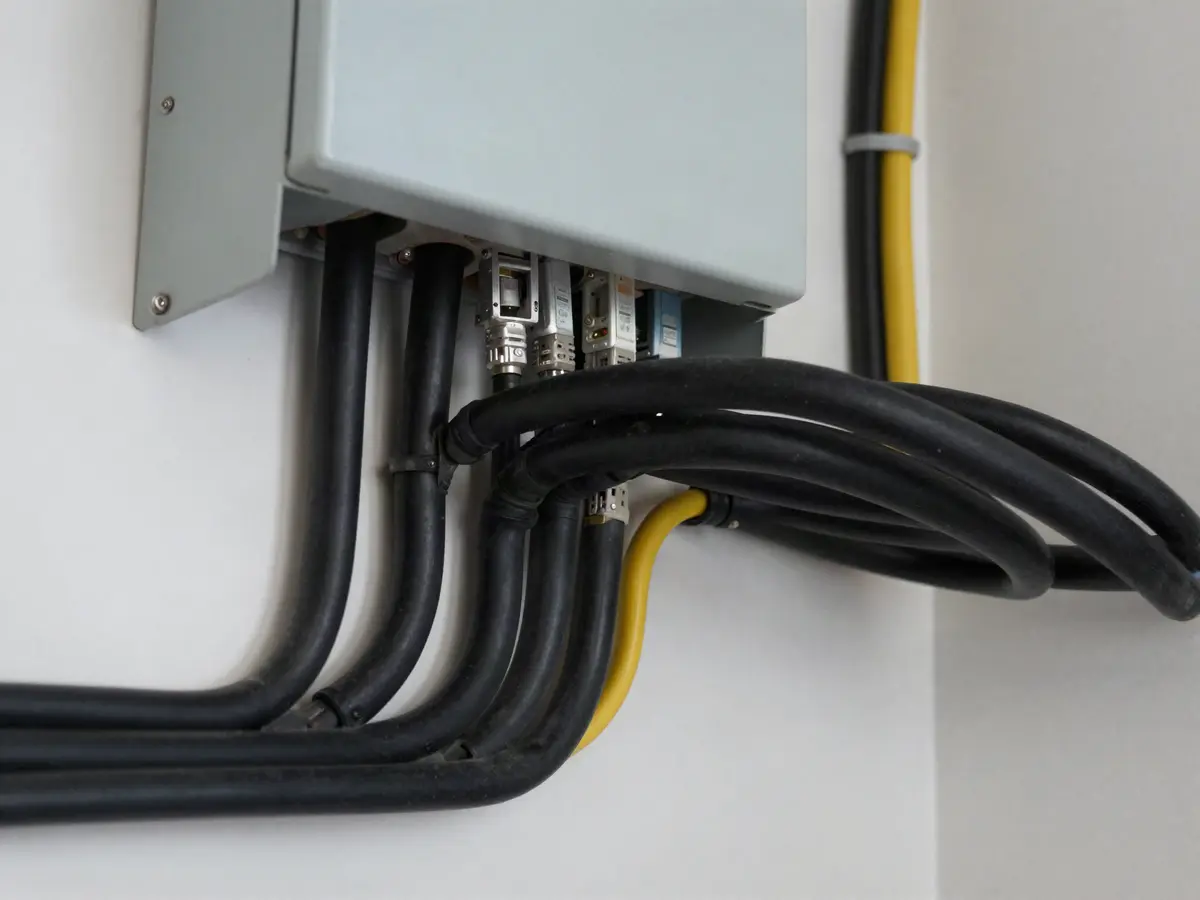
Every circuit in the house runs through the panel, and its rated capacity in amps is a hard ceiling. A service sized for a house built decades ago is often undersized for a modern household running central air, an electric range, and a car charger off the same feed.
A panel upgrade means a larger main breaker, new circuit breakers matched to it, and a coordinated shutdown with the utility since the service drop is theirs to disconnect and reconnect. We tell you plainly if your specific panel is a model with a known failure history that inspectors flag on sight - some older stab-lok and federal-style panels fall in that category, and replacing one is not a scare tactic, it is what the inspection record will ask for anyway.
Modern protective devices are cheap insurance once the panel supports them: ground-fault protection in kitchens, bathrooms and outdoor outlets, arc-fault breakers that detect the kind of sparking inside a wall that starts fires, and whole-home surge protection that sits at the panel rather than in a power strip.