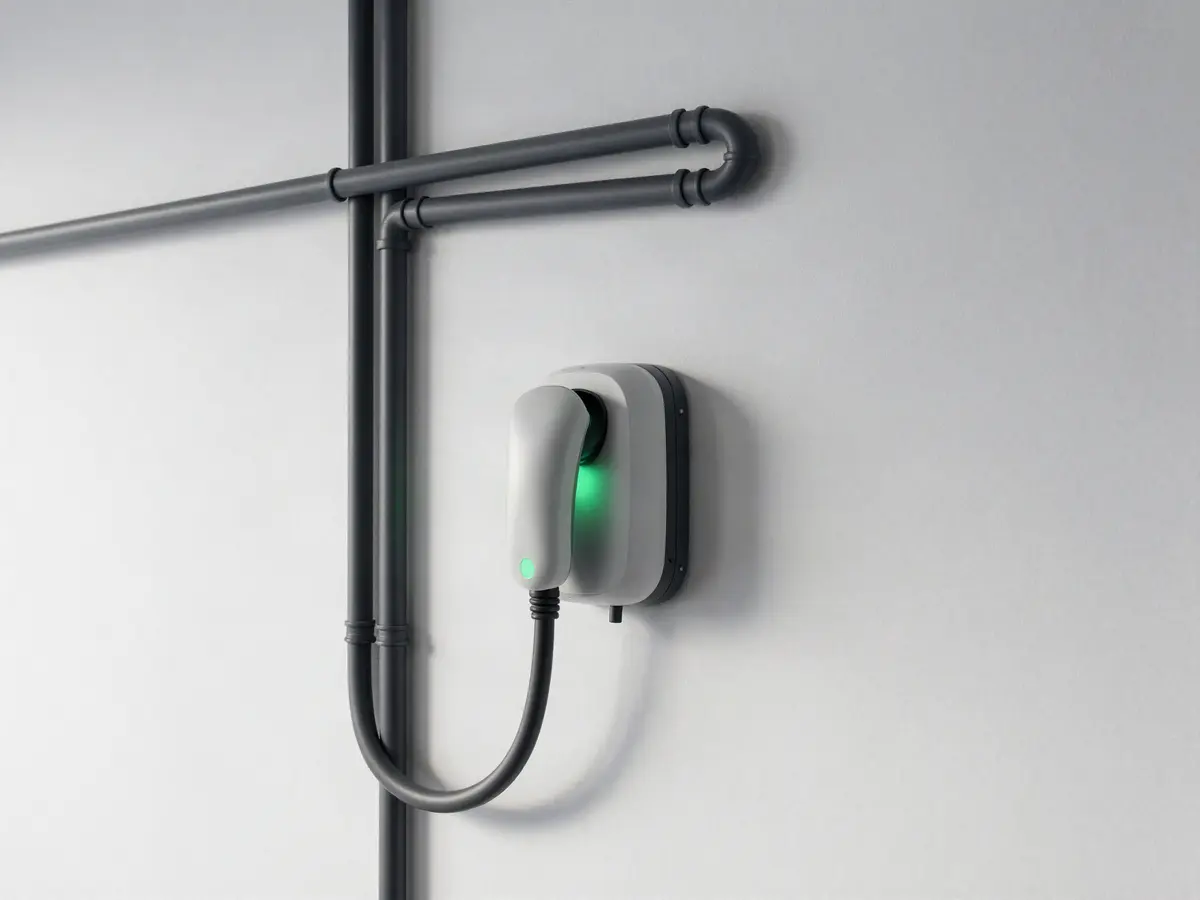
Price mostly comes down to the run from your panel to your parking spot: how far it is, and whether the cable has to cross a finished wall, an attic, a crawl space, or go buried out to a detached garage. Conduit run along a surface is faster and cheaper than concealed cable through finished walls, and a detached garage almost always means a trenched run.
Hardwired versus a plug-in unit on a dedicated outlet depends on the charger you choose and, in some jurisdictions, on code - some units require a hardwired connection, others are only listed for a plug. If the charger sits outside, it needs outdoor-rated equipment and weatherproof covers, full stop. Most utilities and rebate programs also require a permit and inspection, and an uninspected install can void a rebate as well as being unsafe.
Ask about utility rebates for a qualifying charger, and about scheduling charging to off-peak hours through the car or the charger itself - the time-of-use savings are usually the largest ongoing benefit, bigger over a year than anything on the install invoice. We also handle second chargers, condo and multi-unit parking, and small commercial or workplace installs.