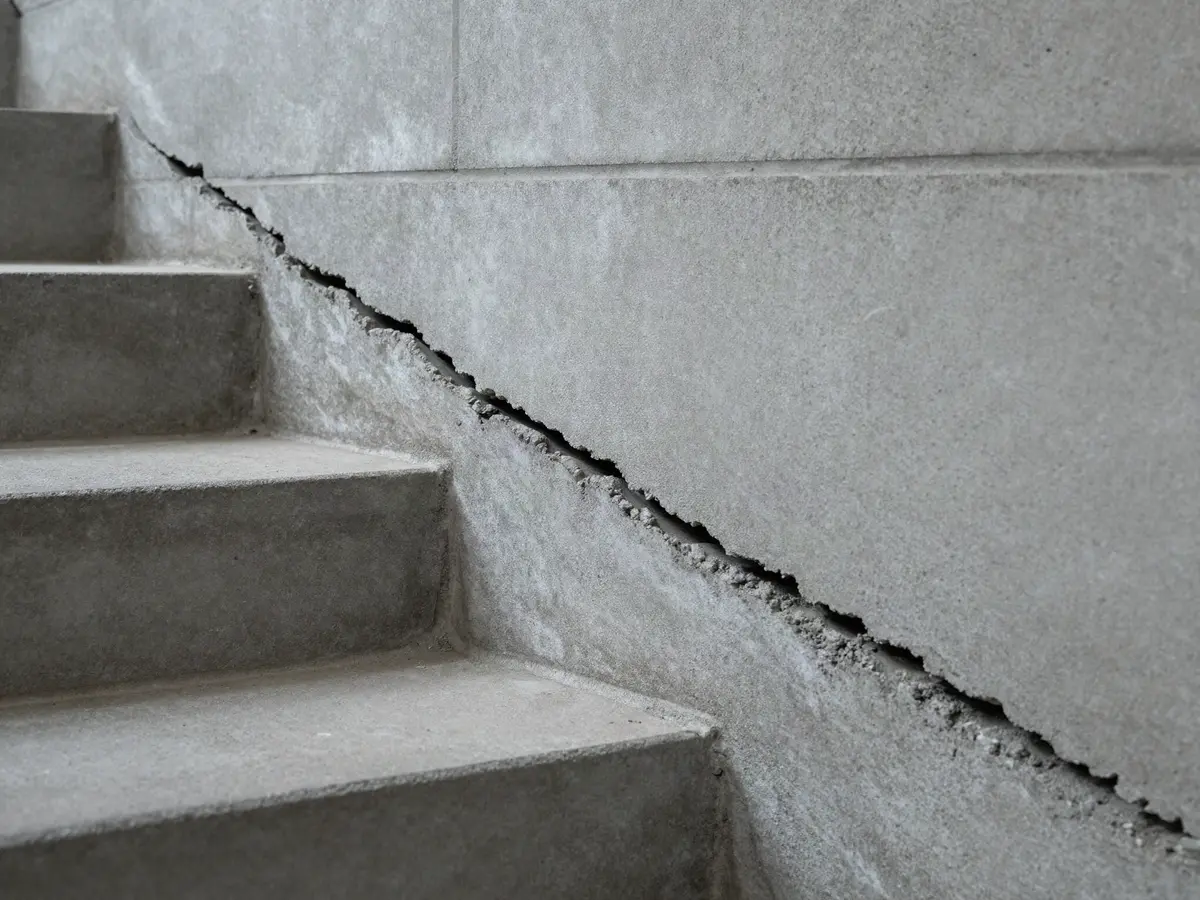
Thin vertical hairline cracks in poured concrete are extremely common and are usually shrinkage from the concrete curing, not a sign your foundation is moving. Most of the calls we talk people out of taking further start here, and that costs us nothing to say plainly.
What genuinely warrants a closer look: a horizontal crack across a basement wall, which usually means soil pressure pushing inward. A stair-step crack running through block or brick mortar joints. Any crack wider than a coin is thick, one that is visibly wider at one end than the other, or one you can watch growing over a season. Doors and windows that suddenly start sticking, and floors that develop a slope, are the corroborating signs that usually show up alongside real movement.
Movement is almost always a water story. Soil that swells when it is wet and shrinks when it dries pushes and pulls on a foundation with real force. Poor drainage and downspouts that discharge right at the wall, a plumbing leak under the slab, and large tree roots drawing moisture unevenly from one side of the house are the usual causes. That is why fixing the water is part of fixing the foundation - a repair that ignores drainage tends to move again.