R-value measures resistance to heat moving through a material. It says nothing about air leaking around it, and air movement is usually the bigger loss. A house can carry a thick layer of insulation and still lose heat fast through gaps at the top plates, recessed lights, the attic hatch, and every pipe and wire that punches through the ceiling.
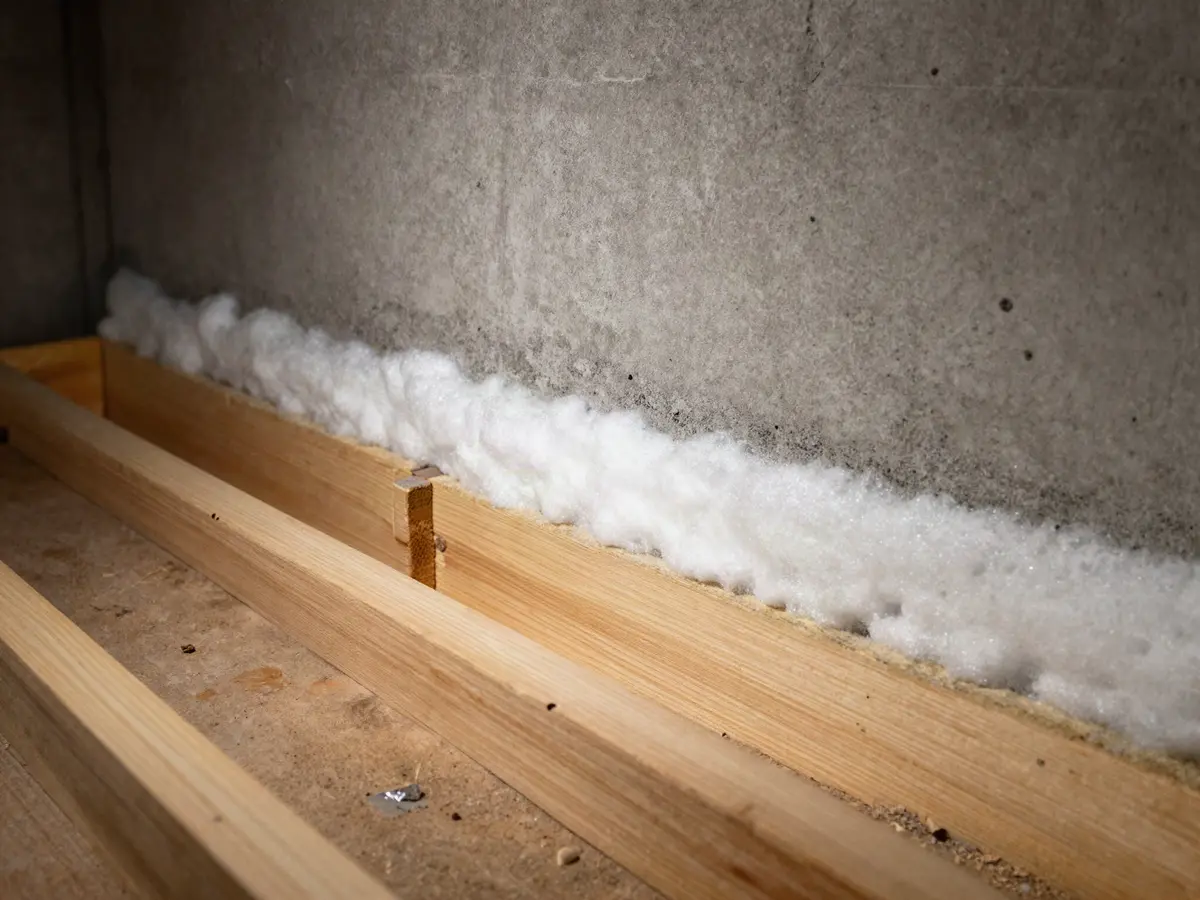
That is why we seal before we blow insulation over an attic floor: top plates, can lights, the hatch, plumbing and wiring penetrations, and the rim joist band in the basement. Skipping this step is the most common shortcut in the trade, and it is the reason a newly insulated attic sometimes barely moves the bill.
Sealing an attic also has to leave the soffit vents clear, with baffles holding the airflow path open at the eaves. Seal the attic floor without protecting ventilation above it and you trade a cold room for a damp one - that trade-off gets explained before any work starts, not discovered afterward.