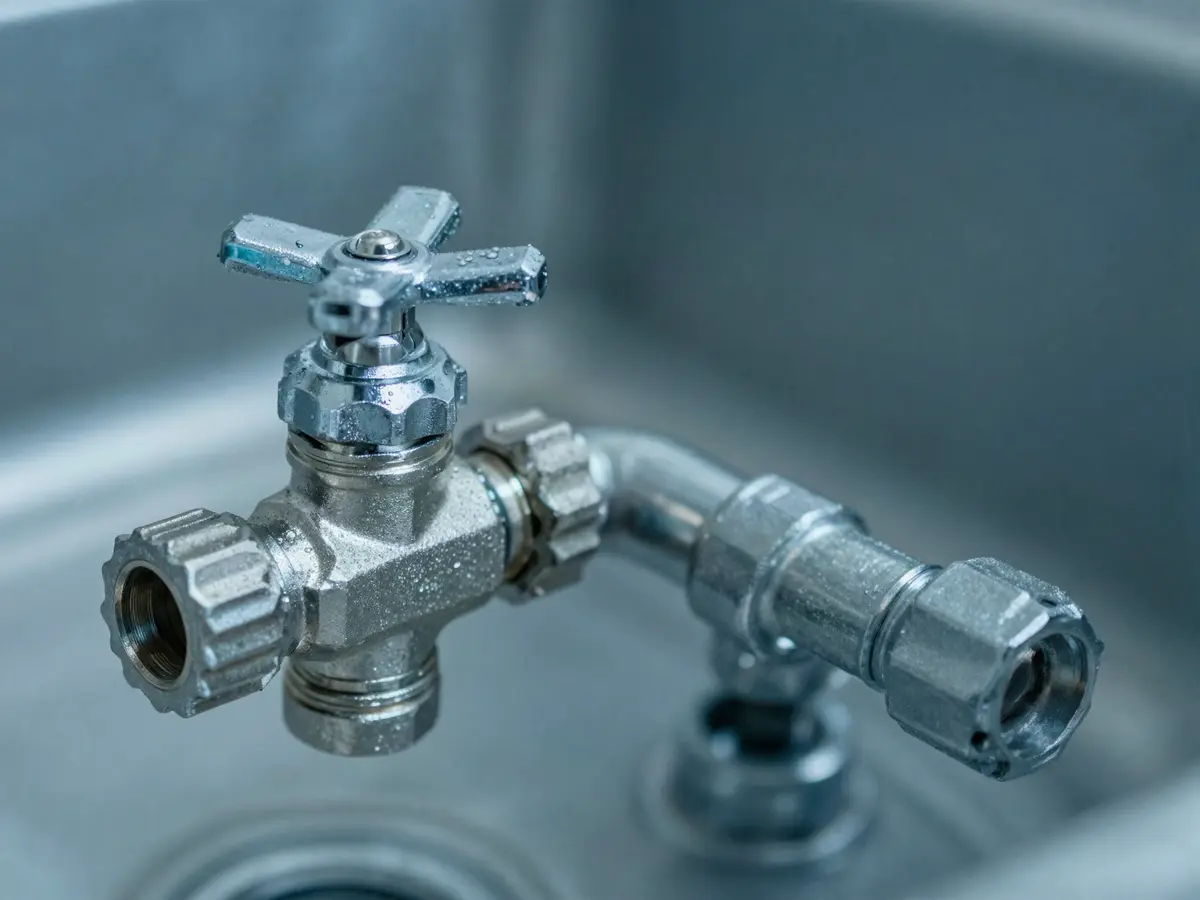
The single most useful thing we can tell you is where the valves are, before you ever need one. A fixture stop is a small oval or lever handle right at the fixture - under a sink, behind a toilet near the floor, or on the line to a washing machine. Turning it clockwise closes it and isolates just that one fixture, so the rest of the house keeps running water while the leak stops.
The main shut-off controls every drop in the house. It sits where the supply line enters - often a basement wall, a utility closet, or a curbside box at the street with a meter key. If you cannot find a fixture stop, or the leak is upstream of one, close the main. Everyone in the house should know where it is before an emergency, not during one.
A water heater has its own valve on the cold inlet line, usually a lever a quarter-turn from open. Close it if the tank itself is leaking, not just a nearby fitting - a tank leaking from the body, rather than a pipe connection, is also a sign the tank needs replacing, not repairing.
Is this an emergency, or can it wait? Call now for a burst or spraying supply line, sewage backing up into the house, no water anywhere in the house, a water heater leaking from the tank body, or a gas smell (call the gas utility first, then us). A dripping tap, one slow drain, a running toilet, or a minor fixture leak already contained with a bucket can wait for a scheduled visit.