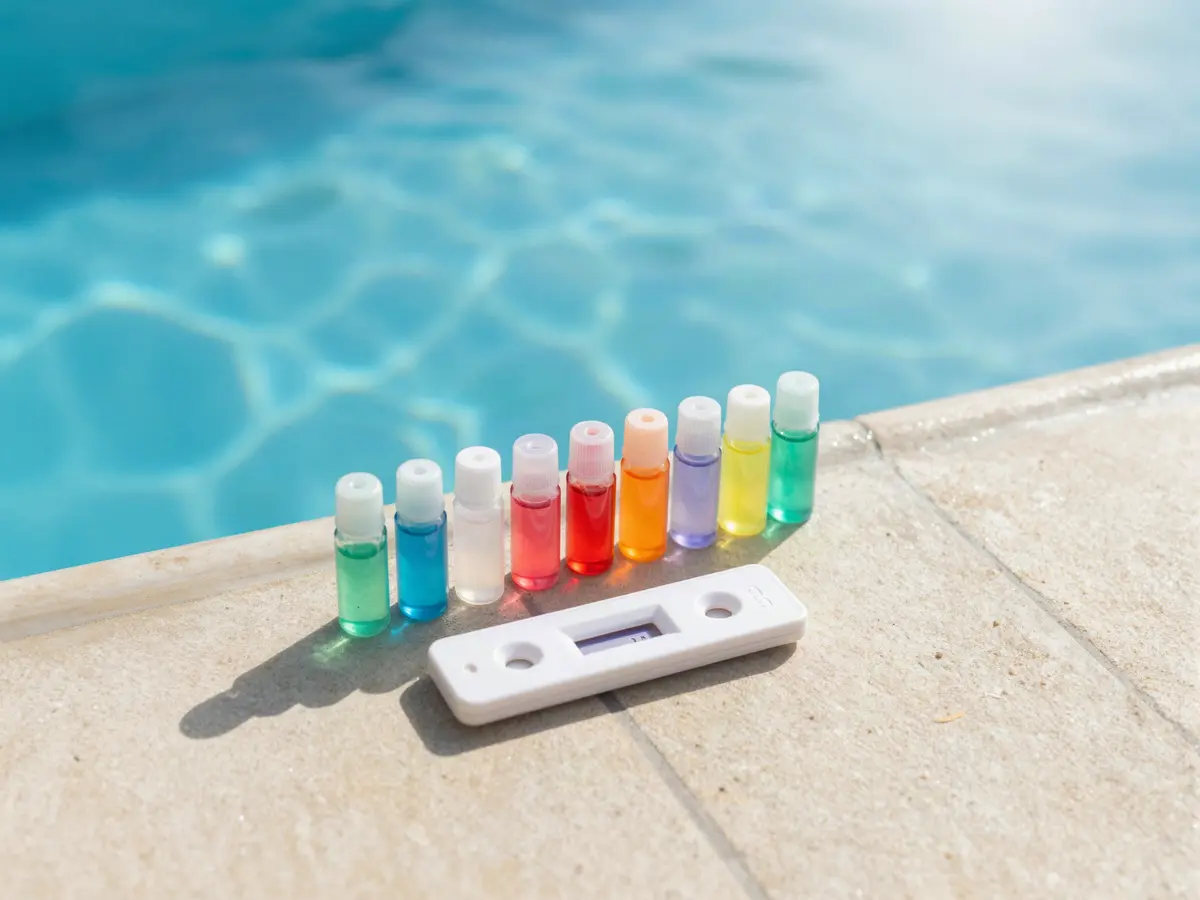
Every visit starts with five readings: free chlorine, pH, total alkalinity, calcium hardness and stabiliser, each with a target range and a reason. We adjust in the right order, because alkalinity buffers pH - chase pH without fixing alkalinity first and it drifts straight back within a day. That is why an amateur can dump chemicals in all summer and never once hold a steady reading.
A pool goes green because chlorine gets consumed - by sunlight, by swimmers, by wind-blown debris - faster than most owners realize. Stabiliser protects chlorine from UV breakdown, but too much locks it up and makes it sluggish instead of protective. So the fix for green water is rarely "add more chlorine" - it is usually rebalancing the whole picture, and sometimes a partial drain to bring an overloaded stabiliser level back down.
Salt pools are still chlorine pools - the generator just makes chlorine from dissolved salt instead of a jug. That makes them lower-effort, not maintenance-free: the salt cell still needs periodic cleaning and eventual replacement, and the same five readings still get tested every week. Circulation matters just as much as chemistry - run hours by season, skimmer and pump baskets, and a filter that is backwashed, rinsed or recharged on schedule, because most water problems that look like a chemistry issue are actually a flow issue.