Three bids on the same house can land $8,000 apart and still all be honest - because they quietly differ on scope, not just price. Here is what to check before you compare a single number.
A layover nails new shingles over the old ones. It is cheaper up front, adds real weight to the structure, hides whatever rot or damage was underneath, and shortens the life of the new roof because it cannot vent from below. A tear-off strips down to the deck so the crew can actually see what they are building on. Ask which one is priced - a bid that does not say is not comparable to one that does.
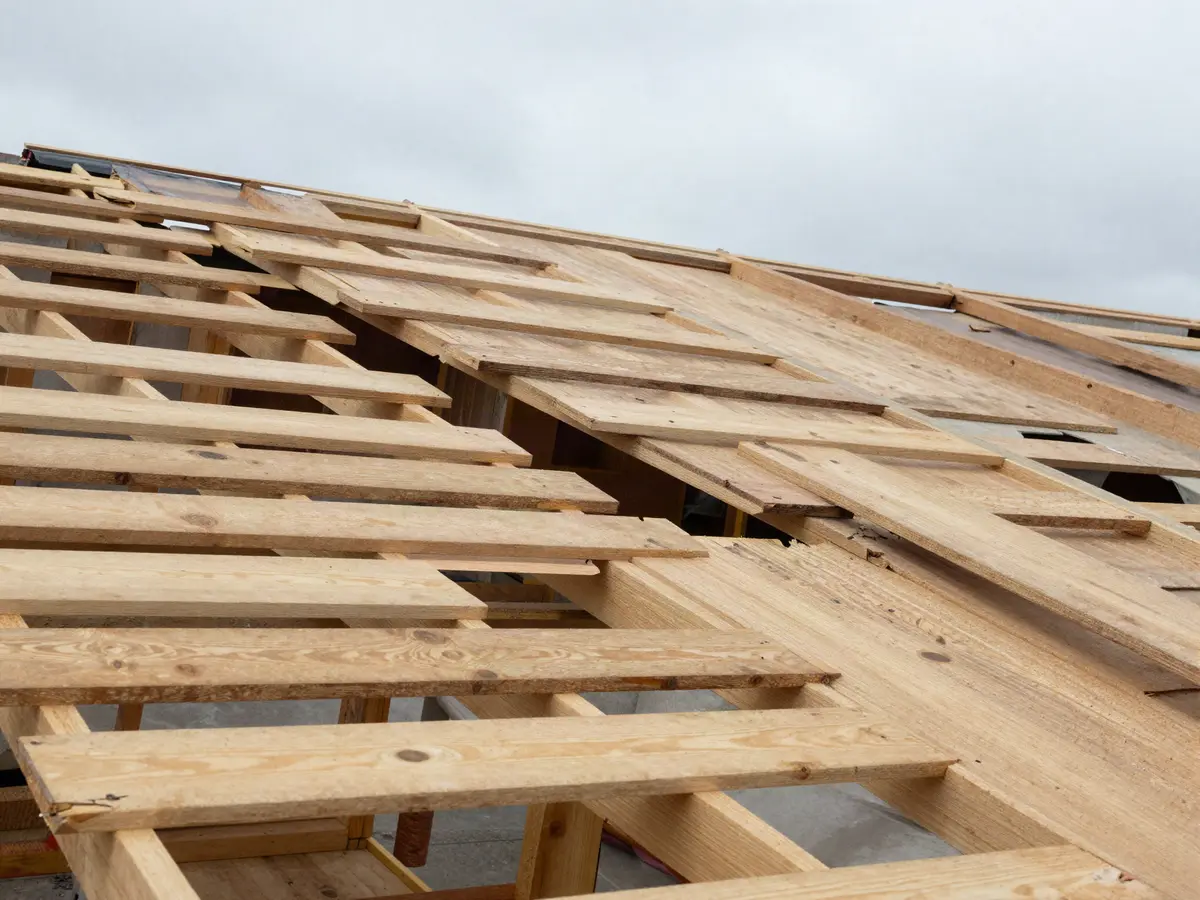
Nobody knows how much rotten decking is under the old shingles until it comes off. An honest bid prices decking replacement as a per-sheet contingency, disclosed up front, rather than pretending it will not happen or burying it in a change order later. Ask what the per-sheet rate is before work starts, not after.
These four lines separate a real bid from a one-line estimate: synthetic underlayment across the whole field, ice-and-water shield at the eaves and valleys where ice dams form, metal drip edge at every rake and eave, and a ridge vent running the length of the ridge. If a bid just says "shingles installed" and skips these, ask why - they are most of what actually keeps water out.
Almost no roof leaks in the middle of a field of shingles. They leak at chimneys, sidewalls, valleys and pipe penetrations - anywhere metal flashing meets the roof. A bid that reuses old flashing to save money is how a brand-new roof leaks in year two. Ask whether flashing is being replaced or reused, at every one of those points, by name.
Most homeowners have never heard the word, but a roof that cannot breathe traps heat and moisture in the attic, which cooks the underside of the shingles and can void the manufacturer’s warranty outright. It takes two parts working together: intake at the soffit, low, and exhaust at the ridge, high. A ridge vent with no soffit intake is half a system.
Every roof carries two separate warranties: the manufacturer’s, covering defects in the material itself, and the contractor’s, covering the installation. Almost every real-world failure is installation, not material - a shingle rarely fails on its own. The workmanship warranty is only as good as the company still being in business to honor it, which is worth asking about directly.
After a hailstorm we will inspect for wind and hail damage and meet your adjuster on site if a claim is filed. What we will not do is offer to cover your deductible - that is insurance fraud, and any contractor offering to eat it is telling you something about how they price everything else.
Architectural asphalt shingle is the default for most homes: a good middle life span at a moderate price. Standing-seam metal costs more up front but lasts far longer and sheds snow and hail better. Tile and flat-roof membrane systems fit specific architecture and roof shapes. None of these is universally "best" - the right one depends on the house, the roof pitch and how long you plan to own it.
A typical tear-off and replacement runs a four to six person crew for one to three days depending on the roof. We pull permits before work starts, lay tarps to protect landscaping and gutters during tear-off, and run a magnetic sweep for stray nails across the yard and driveway before we call the job done.