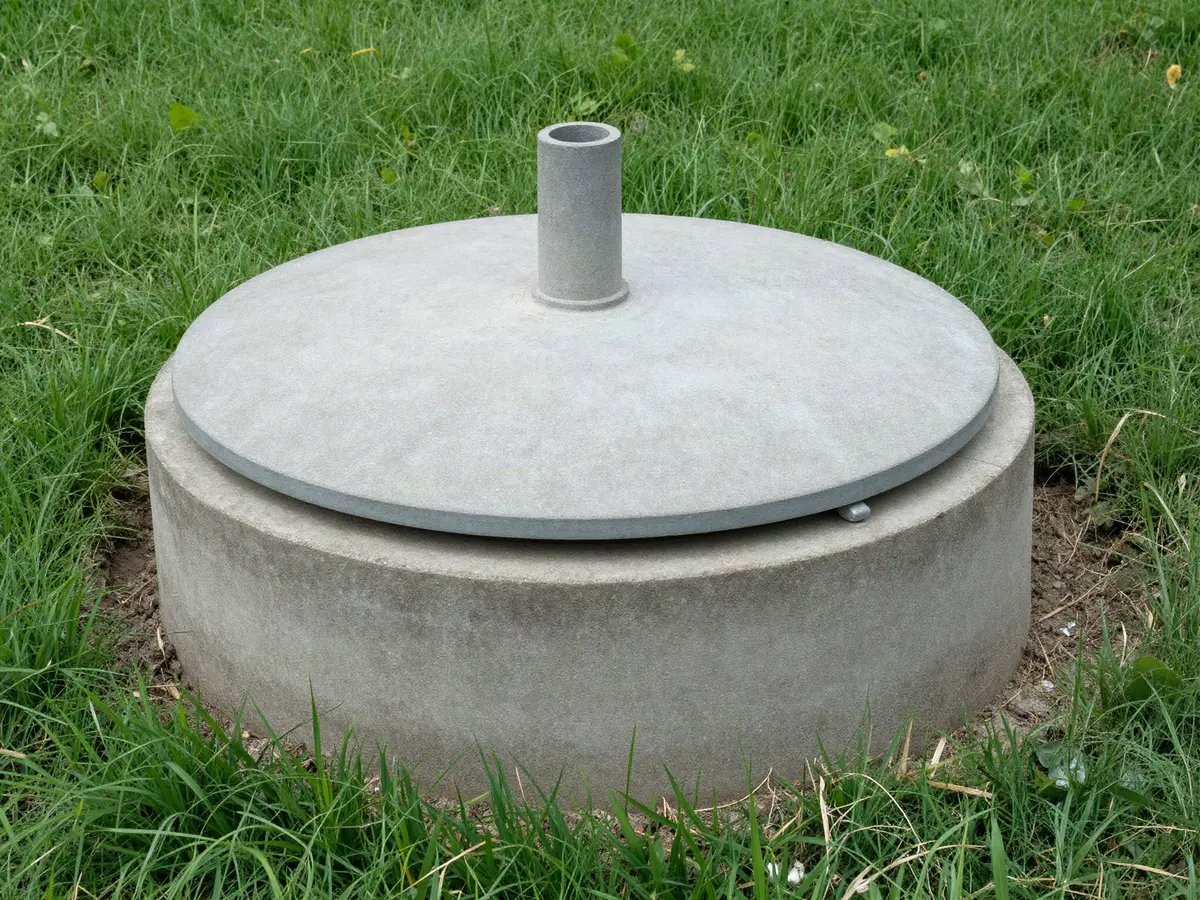
Everything leaving your house settles inside the tank. Solids sink to the bottom as sludge, grease and fats float to the top as scum, and the liquid layer in between - the only part that is supposed to leave the tank - flows out to the drain field.
The drain field is a network of buried perforated pipe over gravel and soil. The soil itself does the actual treatment, filtering and breaking down what reaches it - the field is not a drain, it is a living filter.
Pumping exists for one reason: to remove the sludge and scum layers before they build up enough to reach the outlet and travel into the field. Once solids reach the field, the soil clogs and stops absorbing - and a clogged field is the expensive failure, not the tank.
Warning signs, in order of how urgent they are: slow drains throughout the whole house at once (one slow drain alone is a plumber's job, not this), gurgling from fixtures, a sewage smell indoors or in the yard, soggy or unusually green grass over the field, and sewage backing up into your lowest fixture. That last one is a call-today emergency.