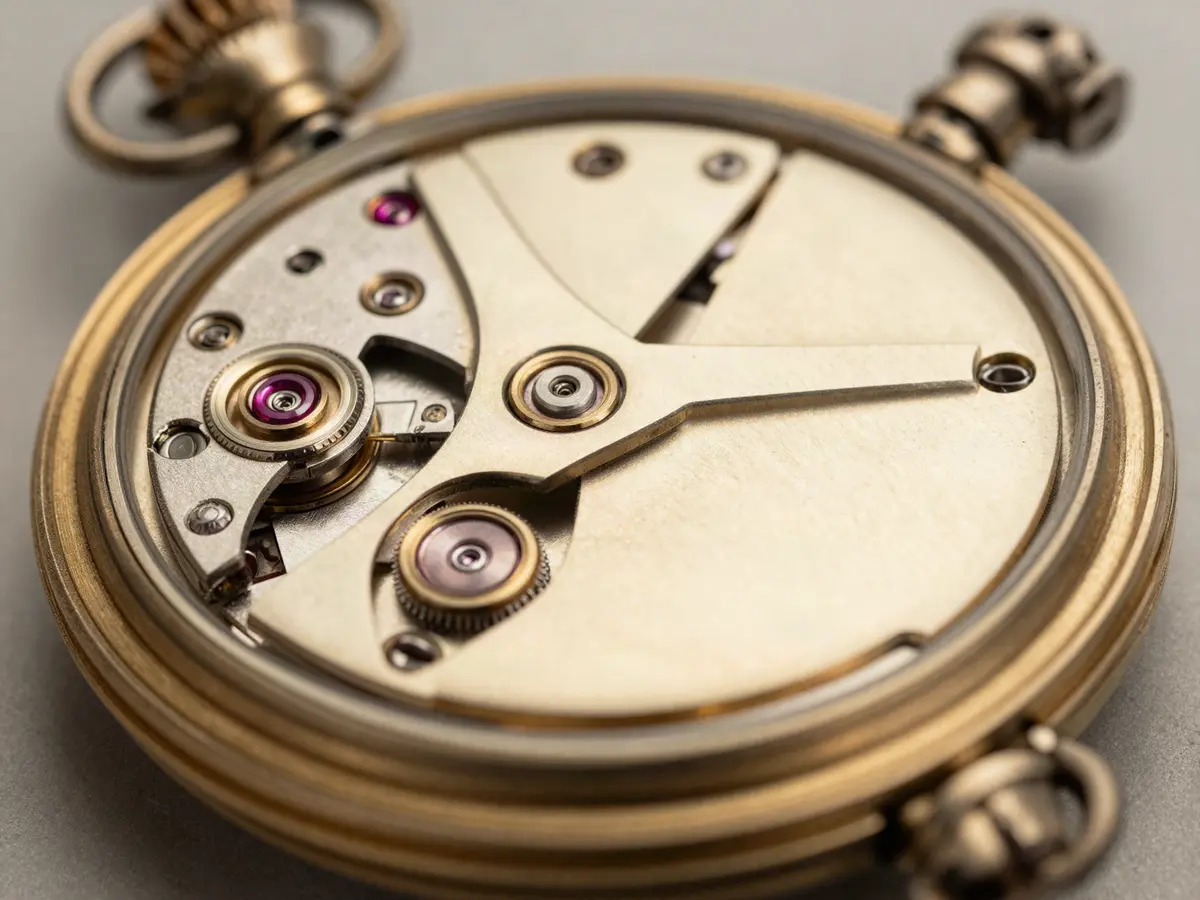
Mechanical or quartz? We will tell you which one you have
The first thing that happens with any piece is opening the case back to see what is actually inside, because a dial and case can look identical between a genuine mechanical movement and a battery-driven quartz replacement fitted at some point in the piece's life. That distinction decides almost everything about whether restoration makes sense.
A mass-produced quartz movement, even in a handsome old case, is usually not worth a full restoration bill - a new module costs less than the labor to rebuild the original would. A genuine antique mechanical movement, hand-finished and jeweled, is a different matter entirely, and we say so plainly rather than running up a bill on a piece that is not worth it either way.
Twenty-two years at the bench, trained first on wall clocks and later on wristwatches, working from a single loupe and a set of screwdrivers ground down to fit screws no hardware store carries anymore.