Setup is the most common job: adjusting the action, correcting the intonation, dressing or replacing worn frets, and cutting a new nut when the old one has worn grooves too deep to seat a string cleanly.
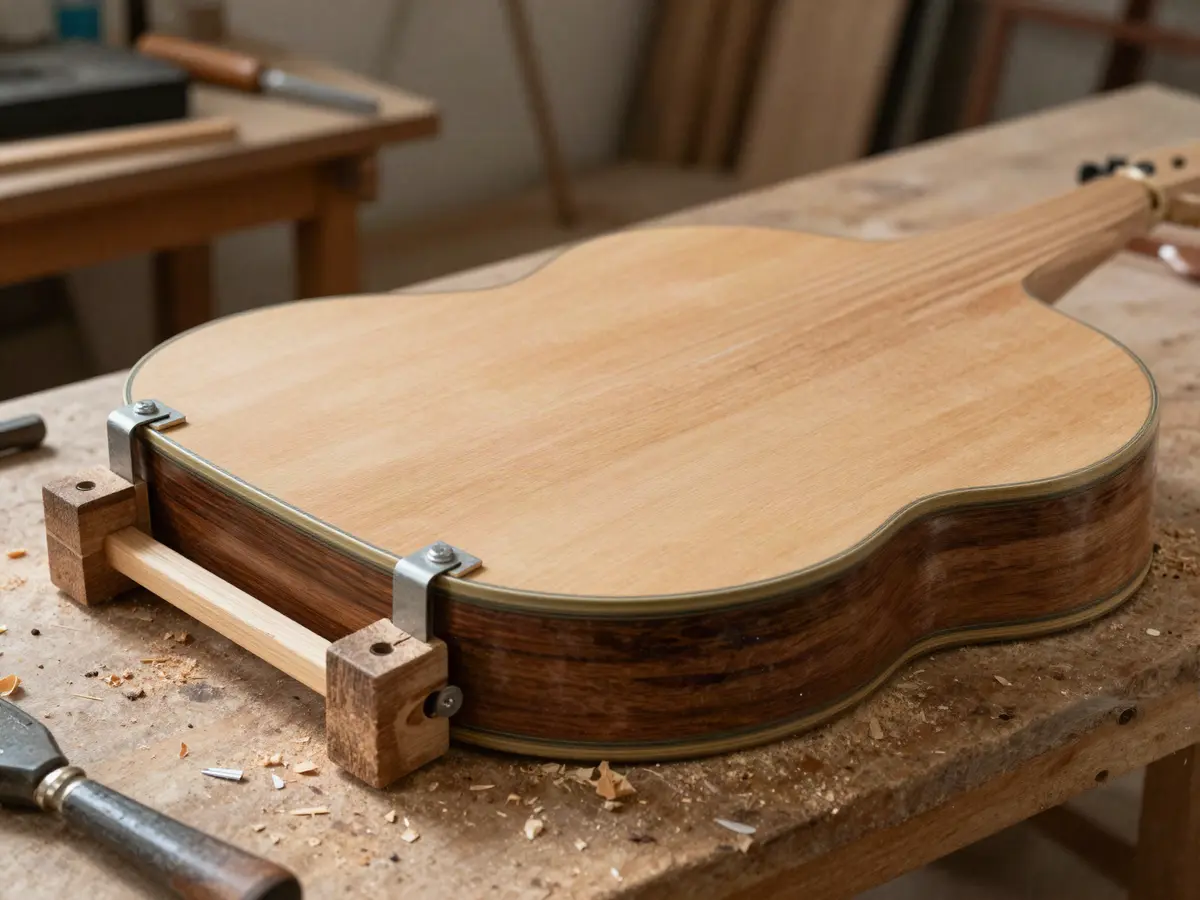
Cracks in a top or back are cleated from the inside and cleaned from the outside so the repair disappears into the grain rather than sitting on top of it. A seam that has opened along the ribs is re-glued under clamps, not filled.
A neck reset changes the angle where the neck meets the body, which is what actually fixes action that has crept too high over years of string tension - a job most guitars need once in their life, and one that gets harder to justify the older and rougher the instrument already is.
When we tell you not to repair it: Some instruments come in with damage deep enough - a snapped neck block, a top cracked in several places, wood gone soft with old water damage - that the honest number for a full structural rebuild runs past what a comparable instrument costs new or used. When that is the case, we say so plainly at the first look, and we would rather send you home with that answer than take a job we do not believe is worth the cost to you.
Custom building: Alongside repair, the bench builds a small number of instruments a year from raw wood - a slower process than any repair, and one usually started only once a season's repair queue has room for it.