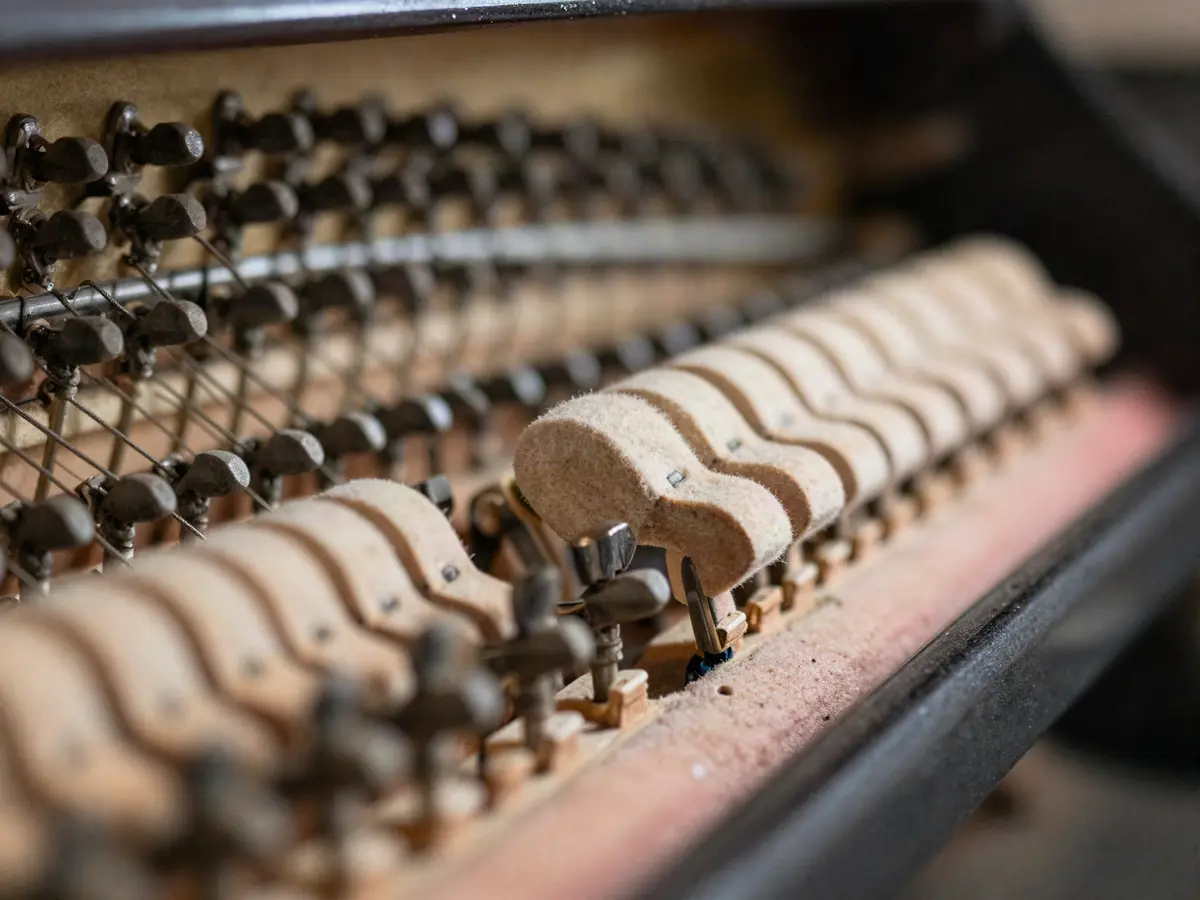
A piano has around two hundred and thirty strings, all pulling against a cast iron frame at enormous tension. As the seasons change, humidity swells and shrinks the wood the strings are anchored to, and the whole instrument drifts flat - usually a little in summer, more in winter when heating dries the air. Nothing is broken. It is just physics, working slowly, all year.
When a piano has gone untouched for a year or more, it is usually not just slightly off - it has dropped far enough that every string needs to move a noticeable amount. Pulling each string straight to its final pitch in one pass puts uneven tension across the frame, and the whole piano settles back out of tune within days. That is why a badly neglected piano needs a pitch raise first: a faster, rougher pass that brings the whole instrument close to correct pitch, so a second, fine tuning pass can settle evenly and actually hold.
We will say so plainly before any work begins. A quick single-pass tuning on a piano that needs a pitch raise might sound better walking out the door and be noticeably off again within a week - which serves nobody. It is a longer, separate visit, priced as one, and we would rather tell you that up front than leave you with a tuning that does not hold.