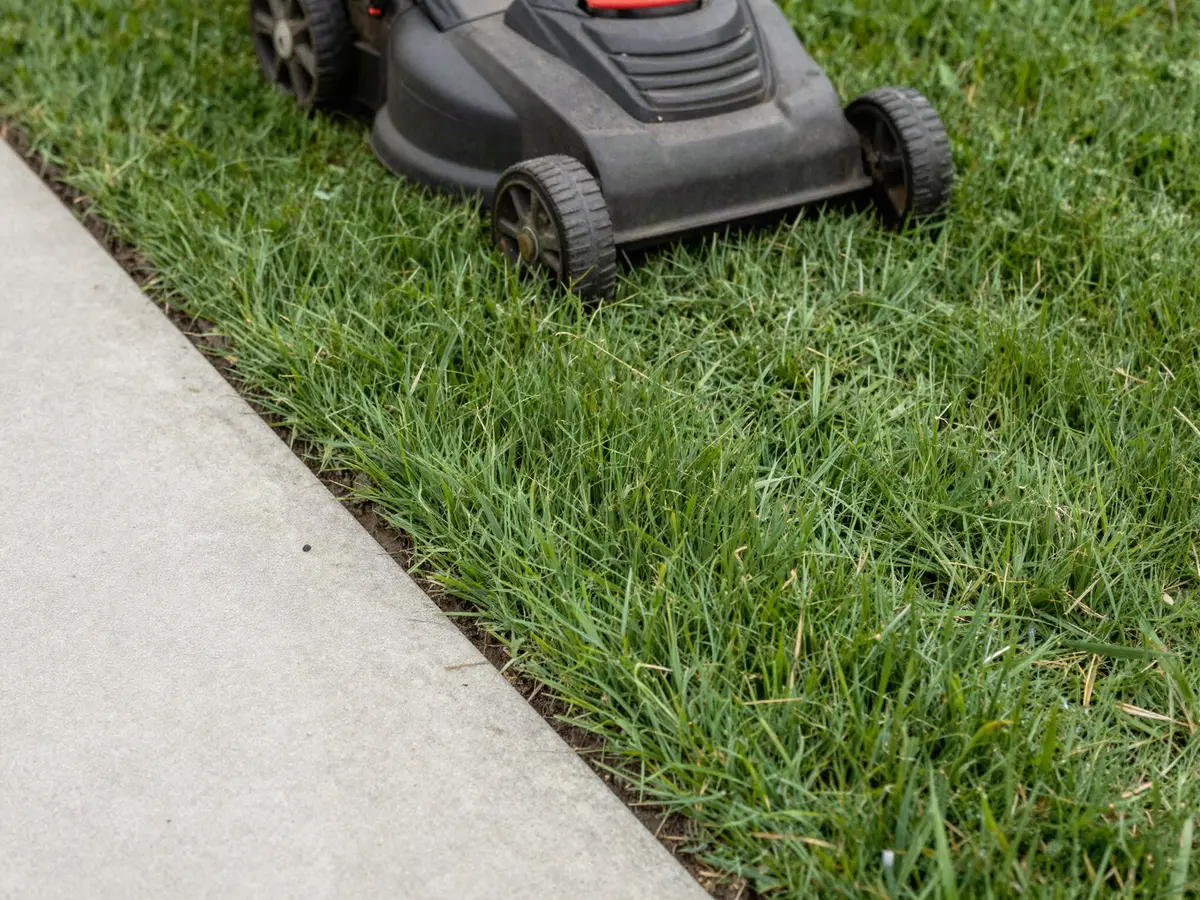
A striped lawn is not a different mowing pattern, it is the same grass reflecting light two different ways. A roller mounted behind the deck bends the blades down as it passes - toward you and the stripe reads dark, away from you and it reads light. Nothing is actually cut differently between the two stripes.
That is why the direction changes every visit - always mowing the opposite way from last time. Bending the blades the same direction week after week trains a grain into the lawn, and a grained lawn stops holding a stripe and starts looking flat no matter how the roller is set.
It costs nothing extra because it happens on the same pass as the cut. It is also the fastest way to tell, from the street, whether a lawn is being mowed on a real schedule or whenever someone gets around to it.
The mowing rules that actually keep a lawn healthy
Never take more than a third of the blade in one cut. Scalping it back to your preferred height in a single pass stresses the roots and opens the lawn to weeds - if it got too tall, we cut it down over two visits instead of one.
The deck goes up in summer heat. Taller grass shades its own root zone, holds moisture longer, and simply out-competes weeds for light - cutting short in July looks tidy for two days and then goes patchy.
Blades get sharpened on a fixed schedule, not when someone notices. A dull blade tears the grass tip instead of slicing it, and a torn lawn goes brown across the top within a day - from a distance it looks like drought stress, and it is actually the equipment.
Direction alternates every visit, same reason the stripe does: mowing the same line every week compacts ruts into the soil and trains a grain that never lets the lawn look fresh.