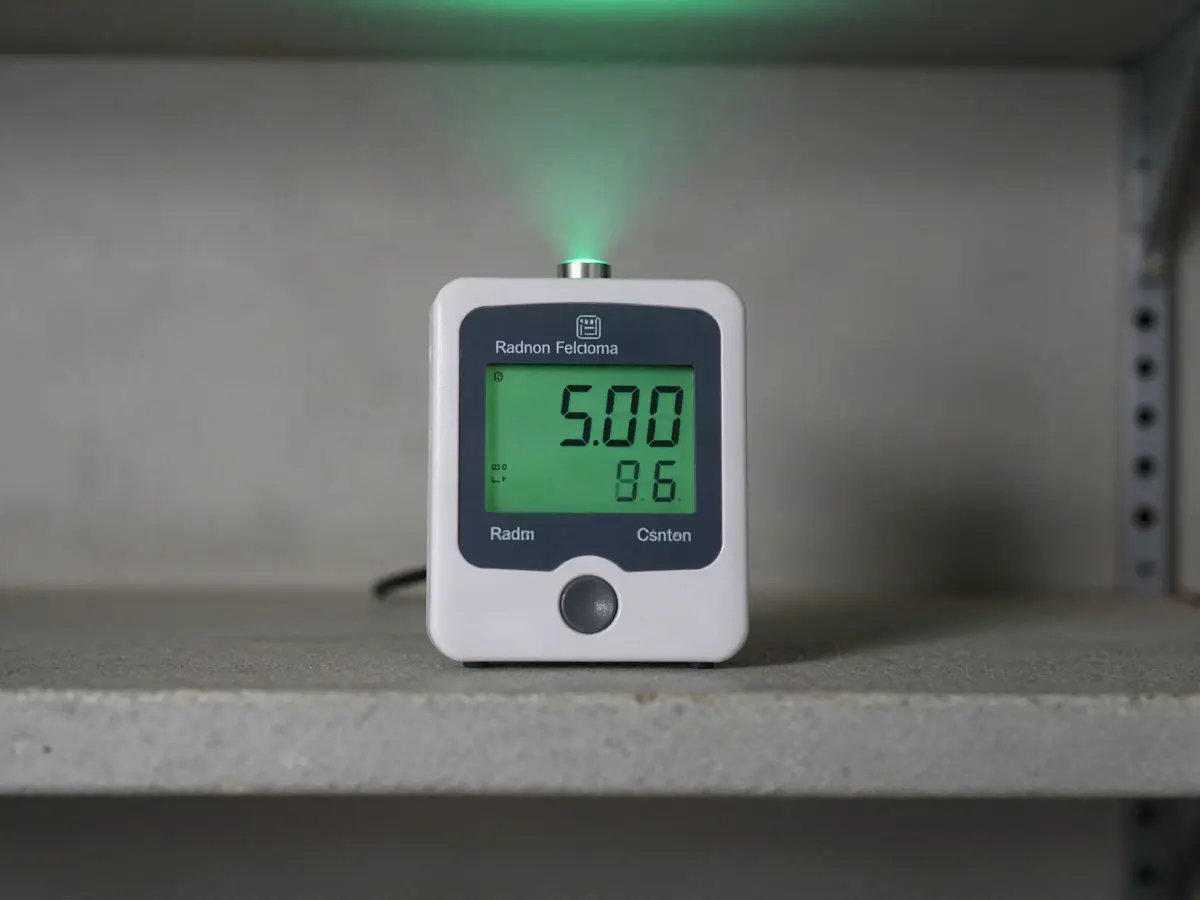
A short-term test runs 2 to 7 days with the house closed up - windows shut, doors used normally. It is fast, which is why it is the standard for a real estate transaction on a clock, but it is a snapshot, not an average.
A long-term test runs 90 days to a year and better reflects the annual average a household actually breathes, because radon levels shift with the seasons. A house shut up tight against winter cold typically reads highest in winter; the same house with windows open in spring can read lower. If you are not on a deadline, long-term is the more honest number.
A neighbor's result tells you nothing about your house. Radon comes up through soil gas directly beneath a foundation, and it varies house to house on the same street depending on slab cracks, sump pits, and how the foundation was built - there is no substitute for testing your own address.
The published action threshold
Health agencies publish a specific action level in picocuries per liter of air (pCi/L), and mitigation is recommended once a result reaches or crosses it. We will tell you exactly where your number falls against that line - not a vague "high" or "low," the figure itself, so the decision is yours to make with real information.
Real estate transactions run on a clock
A test during a home sale often comes back over the threshold with mitigation required before closing, and the closing date is usually fixed and near. Tell us the date on the quote form and we will work backward from it - test, install, and re-test, scheduled to land before the deadline rather than after it.