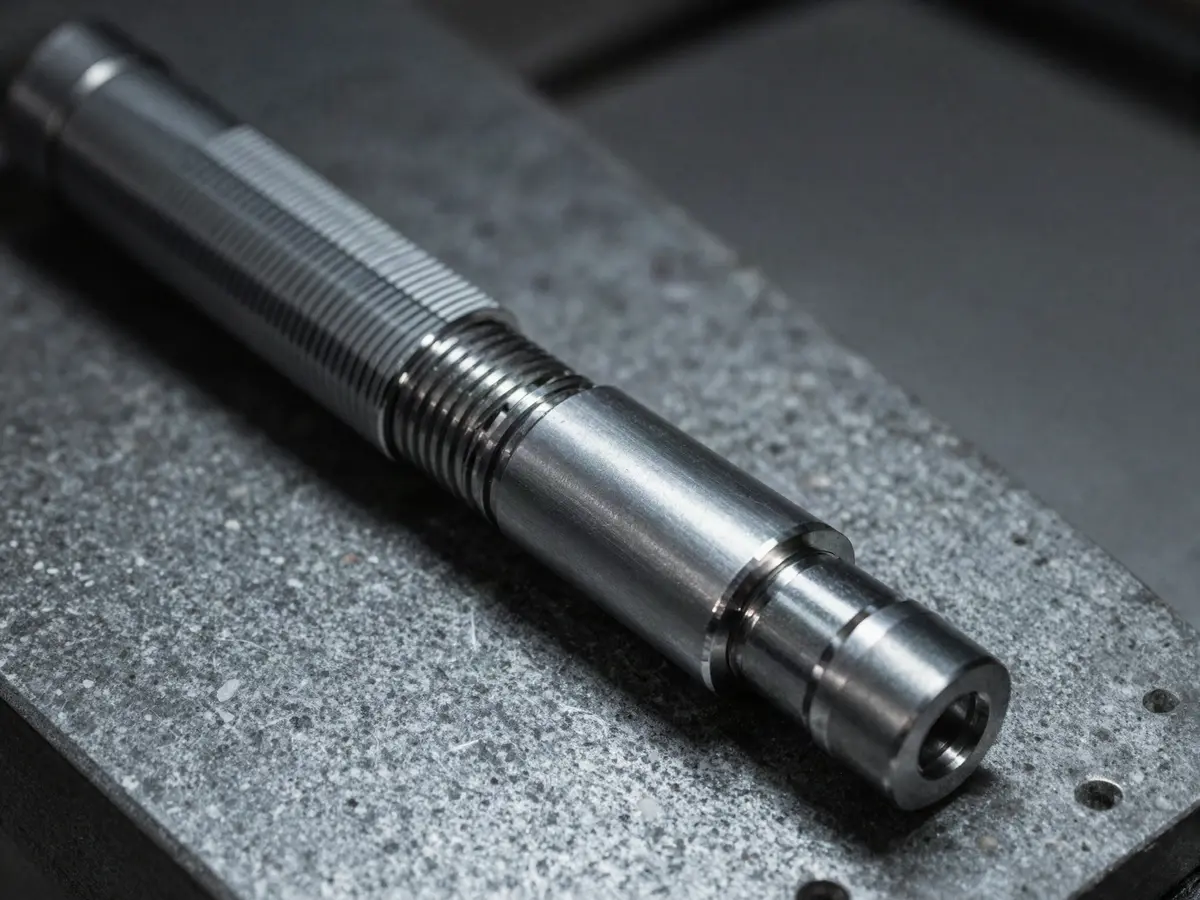
Multi-axis CNC milling for parts with features on more than one face. CNC turning with live tooling for round parts that also need a milled slot, hole, or flat without a second setup. Wire EDM for internal corners and slots a rotating cutter cannot reach, cut from solid or hardened stock. Surface grinding for a flat finish tighter than milling alone can hold. Manual machines stay on the floor for one-off work where writing a program would cost more than just cutting the part.
Materials, and what each one means for the job
Aluminum machines fast and light, and is the default when weight and lead time matter more than strength. Stainless steel goes to parts that will see moisture or chemicals. Tool steel and hardened stock hold an edge or a wear surface, at a slower cut. Brass machines cleanly and is common in fittings and low-friction parts. Titanium is the difficult one - slow speeds, sharp tools, and a price that reflects both. Engineering plastics such as acetal and UHMW go where weight, cost, or electrical insulation rules out metal entirely.
Tolerance is the product
Ordinary machining holds a few thousandths of an inch without asking twice. Tighter work is held closer, and every additional decimal place costs real money - more setups, slower feeds, more inspection. Tell us the tolerance the part actually needs, not the tightest one you can imagine, and we will quote it honestly rather than pad the price defending a number nobody downstream will ever measure.
Geometric tolerancing on the print governs how features relate to each other - how round a bore must be, how parallel two faces sit - separately from their individual dimensions. A print that calls it out clearly is the fastest path to an accurate quote.
Quantity changes the price per part dramatically, because setup time is fixed and gets amortized across the run. A single prototype carries the full setup cost alone; the hundredth part of a production run barely feels it.